Not an AI writer. A specialist on every object.
Behind every Pro & Premium listing sits an AI Expert Assistant trained on authenticity signals, market data and the language serious buyers actually pay for. This is how it works — and what you get.
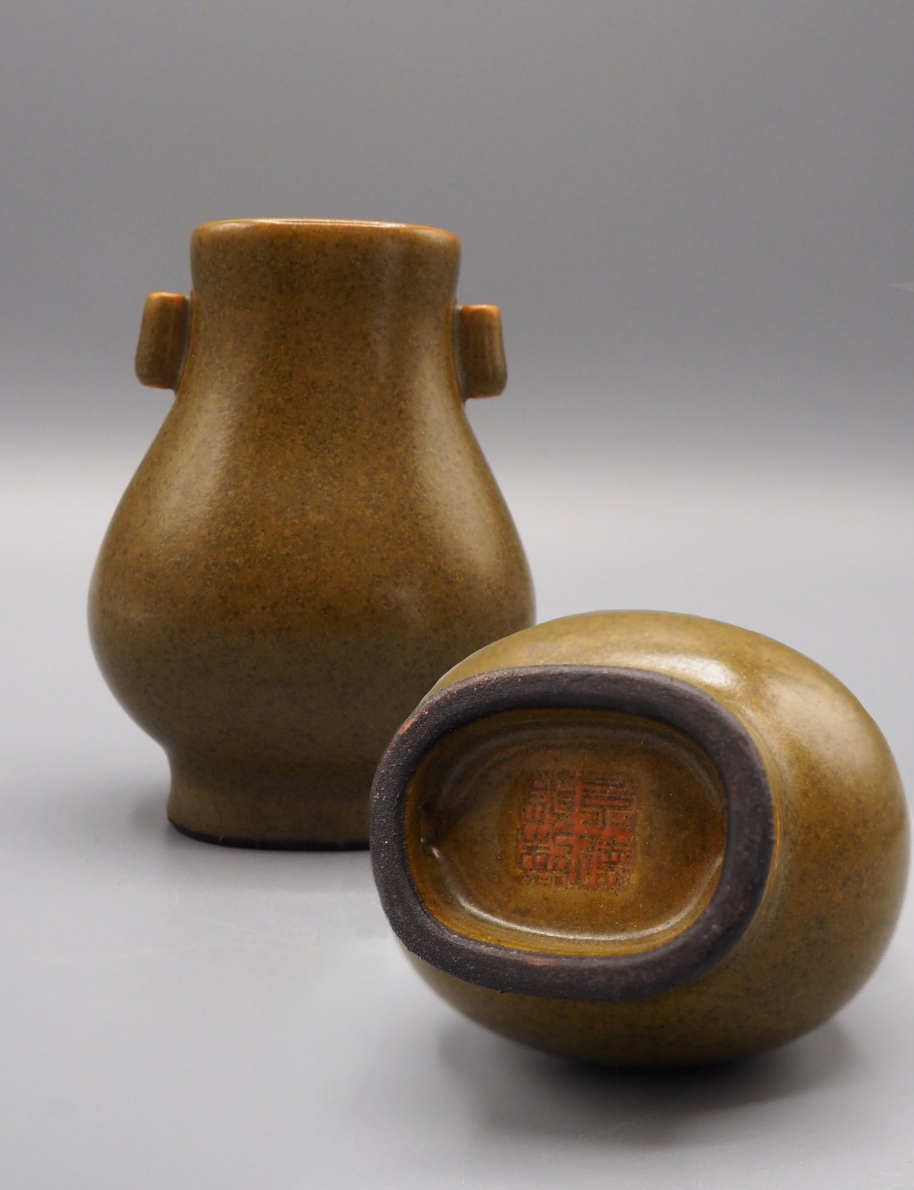
Chinese teadust-glaze Hu vase, 8 cm — Jingdezhen seal mark, Republic period. Estimate €800–1,200.
From a single photo to a specialist briefing.
The AI Expert Assistant runs on every listing — silently improving the copy, and on demand delivering a full briefing whenever you click Learn more about your object.
You upload a photo
Drop in 1–5 photos of the object — front, back, marks, damage. Optionally add what you already know (maker, period, provenance).
The Assistant reads it
It identifies category, period, material, marks and likely origin — then cross-references against thousands of authenticated reference points.
You get a briefing
One click on "Learn more about your object" returns a specialist-grade dossier: authenticity, history, market, red flags and value drivers.
Catch fakes before they catch you.
Generic AI says "looks Chinese, looks old". The AI Expert Assistant tells you exactly which signals to verify — for this category, this period, this maker. Here's a real briefing for a small Chinese teadust-glaze Hu vase with a Jingdezhen seal mark, Republic period.
Glaze too uniform & glossy
highGenuine teadust glaze has a matte, granular 'tea-leaf' speckle with subtle olive-to-brown variation. A flat, uniformly glossy or sprayed-on green surface points to a late 20th-century studio copy.
Jingdezhen seal too crisp
highRepublic-period Jingdezhen seal marks were stamped in iron-red with slightly uneven ink saturation and faint bleeding into the glaze. A laser-sharp, perfectly inked seal is a common modern reproduction tell.
Profile off for a Hu form
mediumA true Hu vase has a balanced pear-shaped body, slender neck and pronounced flared foot. Squat or top-heavy proportions usually indicate a later decorative copy rather than a Republic-period scholar's piece.
Foot rim wiped clean
mediumAuthentic small Republic Hu vases show a thin biscuit foot ring with light kiln grit and natural oxidation. A bright, freshly-ground or chemically-cleaned foot suggests recent manufacture or a heavy restoration.
What you actually get back.
One click. Four sections. Phrased for someone who reads catalogues for a living — not for a search-engine bot.
A small Chinese teadust-glaze Hu vase, 8 cm high, with an iron-red Jingdezhen seal mark. Republic period (1912–1949), in the manner of Qing imperial monochromes. Estimate €800–1,200.
- Matte, granular 'tea-leaf' speckled glaze in olive-brown tones
- Iron-red Jingdezhen seal mark with slightly uneven ink saturation
- Balanced pear-shaped Hu profile with slender neck and flared foot
- Thin biscuit foot ring with light kiln grit and natural oxidation
- Made in Jingdezhen kilns during the Republic period (1912–1949)
- Teadust (chaye mo) glaze revived from Qing imperial Yongzheng / Qianlong models
- Hu form references archaic bronze ritual vessels — a scholar's-taste object
- Steady demand from Asian and European collectors of monochrome porcelain
- Small (8 cm) scholar-scale vases price stronger than mid-size decorative pieces
- Best results: Chinese Works of Art sales at Bonhams, Sotheby's, Dutch & UK rooms
- Crisp Hu silhouette with no firing slumps
- Even teadust glaze with rich speckle, no bald patches
- Clear, period-correct Jingdezhen seal mark
- No restorations, hairlines or rim chips
Sample briefing for illustration. Real briefings are generated from your photos and notes in seconds.
It gets sharper every week you use it.
The Assistant doesn't sit still. It absorbs new auction results, updated market data, and your own corrections — quietly improving the copy, the briefings and the red-flag detection across every category you list in.
Trained on the canon
Reference material from auction house catalogues, museum collections, scholarly databases and price archives — across porcelain, painting, silver, watches, sculpture and more.
Sharpens with every listing
When you correct a category, accept a phrasing or flag a fake, the Assistant learns from the signal. Your workflow becomes its training data.
Live market awareness
Recent realised prices, demand trends and platform-specific buyer behaviour are factored into every briefing — so 'market context' actually means today's market.
Specialist tone, not AI tone
Conservative phrasing — 'attributed to', 'in the manner of', 'circa' — that respects how serious buyers read a description. No hype, no hallucinated certainty.
Three moments it earns its keep.
Before you buy
Drop in a seller's photo before bidding. Get a quick read on authenticity signals and red flags — so you don't pay genuine prices for repros.
While you catalogue
Generate catalogue-grade copy in conservative auction-house language. Period, maker, attribution, condition — phrased the way bidders read.
Before you publish
See platform-specific market context and value drivers, so you price and pitch the lot to the right audience the first time.
Hire your AI Expert Assistant. List with conviction.
Available on every Pro & Premium listing. One click on Learn more about your object — that's it.